April 30, 2026
Celsius Distributions & Crypto Taxes: What You Need to Know for 2025–2026
If you were affected by the Celsius Network bankruptcy, read on. Here’s what you should know about the upcoming payouts and what they entail.
Crypto Accounting
Crypto Bookkeeping
Crypto Tax
If you were affected by the Celsius Network bankruptcy, you may now be receiving —or expecting to receive—cryptocurrency or cash distributions as a part of the recovery process. For many creditors, these payments feel like a long-overdue step toward closure.
However, while the economic reality of these payments is straightforward, the tax treatment is anything but. Namely, many crypto holders are surprised to learn that these distributions can trigger tax reporting, taxable income, or capital losses—particularly under the IRS’s updated crypto rules that go into effect in 2025 and expand further in 2026.
This guide explains what Celsius distributions represent from a tax perspective, why they matter, and what steps you should take to avoid unnecessary reporting errors. Follow along!
What Are Celsius Distributions?
Celsius Network entered bankruptcy proceedings in 2022. Under the court-approved restructuring plan, eligible creditors are receiving partial repayment of their claims through a series of distributions. These payments are not made all at once, and they are not uniform across all creditors.
Depending on your original elections, jurisdiction, and the distribution partner handling your plan, the distributions may be paid:
- In Bitcoin (BTC), or
- In USD or stablecoins.
Celsius has also provided guidance on how future recoveries are expected to be handled. Based on current disclosures:
- A new distribution is expected to start in February 2026
- This is expected to be the final distribution paid in Bitcoin
- Future recoveries, if any, are expected to be in paid USD or stablecoins.
Because each distribution can differ in both form and timing, they must be evaluated individually for tax purposes rather than treated as a single event.
Why This Matters for Taxes
“Although receiving Celsius distributions may feel like you are simply getting your money back, the IRS does not treat them as tax-free by default. From a tax standpoint, each distribution has to be analyzed based on its own facts.”
In general, the IRS views each distribution as involving two elements:
- A partial recovery of your original bankruptcy claim, and
- A potential taxable event, depending on how much is received and when.
Therefore, there is no special IRS exemption or carve-out for Celsius or other Crypto bankruptcies. As a result, standard crypto taxation rules and capital loss principles apply, even when the outcome feels unintuitive.
How Celsius Distributions Are Taxed (In Simple Terms)
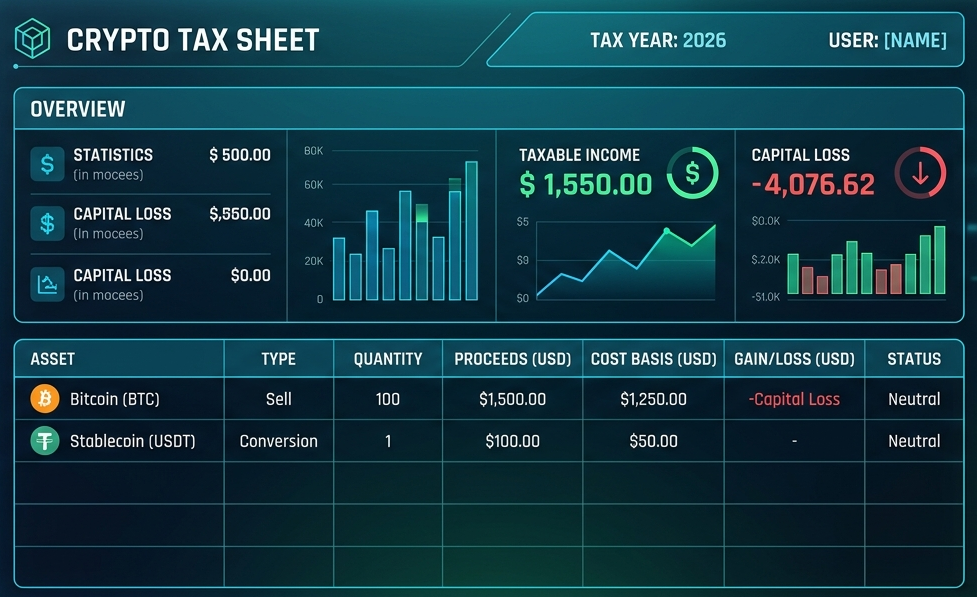
If You Receive Bitcoin (BTC)
When BTC is distributed to you, the IRS focuses on its value at the moment you receive it. Specifically:
- The fair market value of the BTC is determined on the distribution date
- That value is compared to the portion of your remaining claim basis allocated to the distribution.
Once received, the Bitcoin is treated as newly acquired crypto for tax purposes, meaning that:
- It receives a new cost basis equal to its value on the day received, and
- A new holding period begins the following day.
From that point forward, this BTC must be tracked just like any other crypto you own. Any future scale, exchange, or transfer may result in gain or loss based on this newly established basis.
If You Receive USD or Stablecoins
Cash or stablecoin distributions follow a slightly different tax analysis. Rather than creating a new crypto basis, the IRS compares the amount received to your remaining claim basis.
As a result, you may end up with:
- No taxable income if the distribution is treated as a return of capital
- A capital loss if recoveries remain below your total basis
- Taxable income if the recovery exceeds the basis allocated to that distribution.
It’s important to note that capital losses are subject to IRS limitations and often must be recognized over multiple years. Because of this, incorrect allocation or timing can materially affect your overall tax position.
Why 2025 and 2026 Are Especially Important
The timing of Celsius distributions is especially significant because the IRS’s crypto reporting framework is changing rapidly.
Starting in 2025, new tracking requirements apply:
- Crypto must be tracked by wallet and by exchange
- FIFO (First-In, First-Out) becomes the default accounting method
- Cost-basis tracking becomes entirely the taxpayer’s responsibility.
These changes make accurate historical records far more important than in prior years.
Beginning in 2026, the reporting environment is bound to become even stricter. Namely:
- Brokers will begin issuing Form 1099-DA directly to the IRS
- Many forms may show gross proceeds only, without cost basis
- Without proper records, the IRS may assume 100% of the proceeds are taxable.
For Celsius creditors, this creates a heightened risk of overreporting income if distributions are not properly reconciled. Thus, accurate reconciliation and documentation become more critical than ever.
Common Mistakes We See

In practice, we have noticed that many Celsius creditors unintentionally run into the same problems. These include:
- Losing track of the remaining claim basis
- Double-reporting income
- Missing or underutilizing deductible losses
- Receiving IRS notices due to mismatched reporting
- Overpaying taxes because the cost basis was not properly documented.
While these errors are rarely intentional, they can be quite expensive. In most cases, they stem from incomplete records rather than incorrect tax positions. Even more importantly, they are indeed preventable—but only with proper accounting practices.
What You Should Be Doing Now
Given the complexity of the upcoming reporting changes, affected taxpayers should take proactive steps now, rather than waiting until filing season. At a minimum, you should:
- Track each Celsius distribution separately
- Allocate your original claim basis carefully
- Reconcile all wallets and exchanges involved
- Prepare for the February 2026 distribution in advance
- Keep documentation that supports all fair market values and timing
Many crypto platforms and exchanges are not designed to handle bankruptcy recoveries correctly, which means that manual reconciliation is often required and recommended.
How We Can Help
We work with Celsius creditors and crypto holders to bring clarity and structure to their reporting. Our services include:
- Full wallet and exchange reconciliation
- Proper tracking and classification of Celsius distributions
- Cost-basis reconstruction and allocation
- FIFO-compliant crypto tax reporting
- Audit-ready documentation and support
- Strategic planning to avoid overpaying taxes.
Whether your activity is relatively straightforward or highly complex, we can help ensure that your records align with current IRS expectations.
Conclusion
Celsius distributions are tax events that require careful handling. With expanded IRS reporting, stricter documentation standards, and additional distributions expected in 2026, now is the perfect time to bring your crypto records in order.
📩 If you need help understanding your Celsius distributions or preparing for upcoming reporting changes, we’re here to help.
This content is for informational purposes only and does not constitute tax or legal advice.
References:
Celsius Claims Portal, https://claimsportal.celsius.network
IRS, About Form 1099-DA, Digital Asset Proceeds From Broker Transactions, https://www.irs.gov/forms-pubs/about-form-1099-da
FAQ:
Do I Owe Tax If I Lost Money on Celsius?
Maybe — but not always. It depends on timing, recovery amounts, and how your claim is tracked.
Losing money does not automatically mean there is no tax obligation. While many Celsius creditors suffered real economic losses, tax rules are based on mechanics, not fairness.
The IRS looks at:
- What you originally invested or deposited (your tax basis)
- What you received back (crypto or cash)
- When you received it
- How much basis remains after each distribution.
Even if you lost money overall, individual distributions can still be taxable.
In Which Cases are Taxes Not Owed?
You generally do not owe tax when:
- The value of the BTC or USD you received is less than your remaining claim basis
- The distribution is treated as a return of capital
- No excess value is received beyond your basis
In these cases, the distribution simply reduces your remaining claim basis.
When Do Taxes Usually Apply?
You may still have taxable income if:
- The value of a distribution exceeds the remaining basis allocated to it
- The BTC is received at a higher-than-expected market value
- The basis was already reduced by earlier distributions
- The records are incomplete, meaning that the IRS assumes proceeds are taxable.
This risk increases significantly starting in 2026, when Forms 1099-DA are issued without cost basis.
What About Capital Losses?
Capital losses may be available, but with important limitations:
- Losses are typically recognized over time, not all at once
- Only $3,000 per year can offset ordinary income
- Excess losses carry forward to future years
- Claiming a loss too early may reduce long-term tax benefits.
Therefore, good timing and accurate and up-to-date documentation are critical.
Why Does Good Record-Keeping Matter?
If you do not properly track:
- Your original claim basis
- Each distribution received
- Wallet-level crypto receipts
- Fair market value at receipt
The IRS may treat distributions as taxable income by default, even if you lost money overall.
Thus, good and timely record-keeping protects you from:
- Overpaying tax
- Losing deductible losses
- Audit exposure
- IRS mismatch notices.
What Are the Biggest Mistakes We See?
Many taxpayers assume that, just because they lost money, they do not need to report anything come tax season.
This is one of the most common—and costly—mistakes in crypto taxation. Namely, losses must be:
- Calculated correctly
- Timed properly
- Supported with documentation.
How Can We Help You in Loss Situations?
If you lost money on Celsius, we can help you:
- Determine whether you owe any tax at all
- Preserve and maximize allowable losses
- Avoid premature or incorrect write-offs
- Align reporting with new IRS crypto rules
- Stay audit-ready under 1099-DA reporting.
Get in touch, and let’s get started!
Read on the topic






Talk to an expert
Book a Consultation